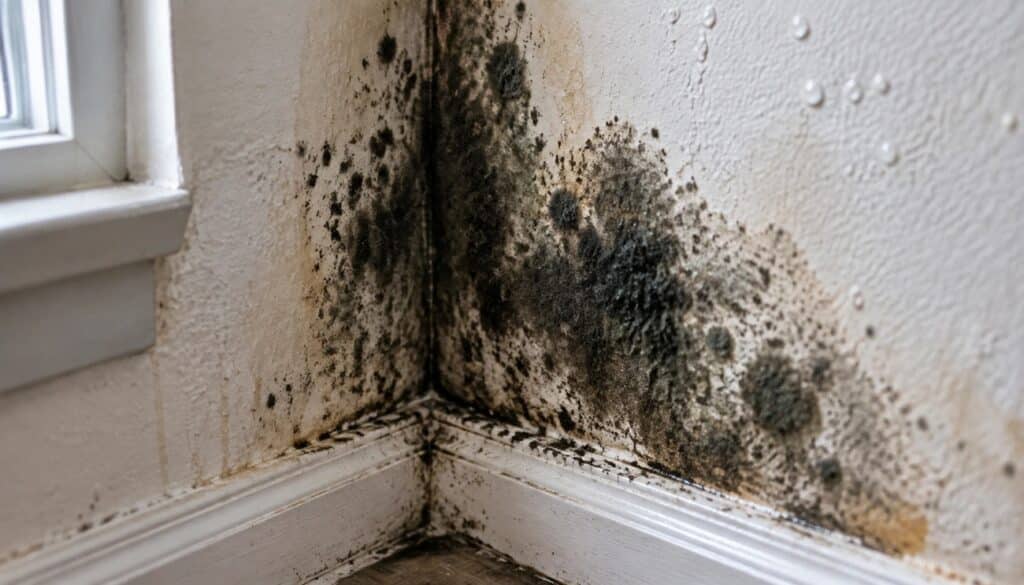
Black mold exposure has proven deadlier than we realized. A CDC study found that roughly 33% of infected patients died from mold-borne illnesses[23][24]. Researchers detected about 450 cases requiring hospitalization in Atlanta-area hospitals over five years. Invasive mold diseases linked to high ICU admissions and mortality rates, especially among post-COVID-19 patients[23][-4].
Symptoms of black mold exposure extend beyond respiratory issues. People who spend time in damp buildings report developing or worsening asthma and allergic reactions[10][25]. This study reveals the effects of black mold exposure and helps you recognize warning signs. You’ll learn who faces the highest risk and how to protect your family from mold damage.
Key Takeaways
Recent CDC research reveals that black mold exposure is far more lethal than previously understood, with invasive mold diseases claiming lives at alarming rates and affecting even those without traditional risk factors.
• Black mold infections are deadly: 45% of patients with invasive mold disease die within 90 days, with 43% requiring ICU admission and half needing mechanical ventilation.
• COVID-19 survivors face elevated risk: Recent COVID-19 patients show 66% mortality rates from mold infections compared to 41% in others, with damaged lungs creating ideal conditions for fungal growth.
• Act within 24-48 hours on water damage: Mold begins growing immediately after water exposure, making rapid response critical to prevent dangerous infestations in your home.
• High-risk groups need extra vigilance: Immunocompromised individuals, transplant recipients, cancer patients, infants, elderly adults, and those with asthma face significantly higher susceptibility to severe mold-related complications.
• Climate change amplifies the threat: Rising temperatures and increased flooding from natural disasters are creating more favorable conditions for mold growth, leading to higher infection rates nationwide.
The connection between environmental moisture control and life-threatening health outcomes cannot be overstated. Maintaining indoor humidity below 60%, fixing leaks immediately, and seeking professional help for mold coverage exceeding 10 square feet are essential protective measures that could save your life or the lives of vulnerable family members.
What the New CDC Study Reveals About Black Mold
“underscoring the need for clinicians and surveillance efforts to consider the possibility of IMDs among patients without classic host risk factors for infection” — Researchers at the CDC, Study authors
Invasive Mold Disease Findings
Our surveillance efforts through the Georgia Emerging Infections Program yielded striking results. Between 2020 and 2024, researchers identified 968 patients with potential invasive mold disease in a variety of Atlanta-area hospitals and outpatient clinics[26]. After careful examination, 449 patients (46%) were classified as having confirmed invasive mold disease[26].
The infections appeared in the lungs most often and accounted for 68% of cases[26]. Sinus or nasal infections followed at 10%, while cutaneous or deep tissue infections represented 11% of cases[26]. Aspergillus species dominated the findings and were responsible for 71% of all invasive mold disease cases[26]. 35% of patients had none of the classic risk factors traditionally used to identify those predisposed to these infections[27].
Higher Mortality Rates Than Expected
These infections proved severe. Among patients with invasive mold disease, 43% required admission to an intensive care unit and 50% needed intubation and mechanical ventilation[26]. The 90-day all-cause mortality rate reached 45%[26], with 30% dying during hospitalization[3].
Hospitals can expect to see 3 to 5 cases per year for every 100 inpatient beds. Larger academic medical centers experience higher rates[28].
Connection to COVID-19 Cases
The link between COVID-19 and invasive mold infections emerged as the biggest problem. Fifty-eight patients (13%) had a current or recent COVID-19 diagnosis[26]. These patients experienced worse outcomes: 66% required ICU admission compared to 39% without COVID-19[26]. Their 90-day mortality rate climbed to 66%, versus 41% in patients without recent COVID-19 infection[26].
Climate Change and Rising Cases
Mold exposure has become a recurring problem after hurricanes and floods influenced by climate change[28]. Dr. Jeffrey Jenks, an infectious disease researcher at Duke University, confirmed that the frequency of fungal infections will increase with climate change[28].
Black Mold Exposure Symptoms You Should Know
Respiratory Symptoms
Mold irritates the eyes, skin, nose, throat and lungs when you inhale or touch it. This happens whether you’re allergic or not[5]. Common respiratory symptoms include coughing, wheezing, shortness of breath, nasal congestion and sore throat[29]. Many of these symptoms mirror a common cold, which explains why people and healthcare professionals often fail to recognize reactions that stem from black mold exposure[29].
Additional complications arise with prolonged exposure. People report fatigue, exhaustion, light-headedness, mental fatigue, irritability, difficulty sleeping and problems with concentration[7]. Persistent nasal congestion, sneezing and sinusitis that improve when you leave a building often reflect allergic inflammation[8].
Allergic Reactions
Mold allergies affect about 3-10% of people, according to the National Institutes of Health[29]. Allergic responses can be immediate or delayed[5]. Your immune system releases chemicals that cause inflammation in your nose, eyes and lungs when you inhale mold spores[9].
Sneezing, runny or stuffy nose, itchy eyes, watery eyes and skin rash are typical allergic reactions[5]. Your symptoms develop within seconds or minutes[9].
Asthma-Related Symptoms
Mold triggers asthma episodes if you’re sensitive. Exposure causes airways to constrict, produce more mucus and become red and swollen[4]. This reaction produces chest tightness, shortness of breath, wheezing or coughing[4]. People with asthma who are allergic to mold experience reduced lung function and increased hospital visits[4].
Severe Health Complications
Hypersensitivity pneumonitis causes the lungs to become inflamed. Symptoms include shortness of breath, cough, muscle aches, chills, fever, night sweats, extreme fatigue and weight loss[10]. Allergic fungal sinusitis results from inflammatory reactions to fungus in the sinuses[30]. Fungal infection of the airways becomes possible if you have a weakened immune system[7].
Who Is Most at Risk for Black Mold Exposure Effects
“EPA advises that people with asthma, infants, children, older adults, and anyone who is immunocompromised are especially vulnerable to mold-related illness and should avoid contact with mold.” — Environmental Protection Agency (EPA), U.S. federal agency
People with Weakened Immune Systems
Invasive mold infections develop days to weeks after exposure in people with weakened immune systems[11]. Those who had organ, tissue or stem cell transplants face heightened vulnerability. Hematopoietic stem cell transplant recipients are especially at risk[11]. Cancer patients encounter major risk, especially those with blood cancers like leukemia and lymphoma[11].
Chemotherapy treatments compromise immune defenses[11]. Medications that suppress the immune system increase susceptibility. These include corticosteroids and biologics[11]. People with AIDS, uncontrolled diabetes or those taking immunosuppressive drugs can develop systemic infections from molds that cause only localized reactions in healthy individuals[1].
Recent COVID-19 Patients
COVID-19 increases the risk for severe fungal infections through its effect on the immune system[2]. Damaged lungs from COVID-19 create scar tissue that fails to respond to infection[12]. Steroids used to treat inflammation act as immunosuppressants and compound the problem[12].
Uncontrolled diabetes and overuse of steroids for COVID-19 treatment serve as key risk factors[2]. Patients with hyperglycemia and ketoacidosis prove especially susceptible[13]. The mortality rate for mucormycosis ranges from 38 to 80%[13].
Age Groups Most Affected
Infants and children possess less mature lungs than adults. This makes them more susceptible to breathing contaminants[14]. They breathe faster and take in more air relative to their body size, which results in heavier exposure[14]. Nearly 80% of asthma cases begin before age six[14].
Elderly individuals often have weakened immune systems or pre-existing health conditions[15]. Lung changes with age reduce respiratory capacity and make irritants harder to tolerate[16].
Occupational Exposure Risks
Workers in damp buildings, schools and nonindustrial buildings develop respiratory symptoms and disease from mold exposure[17]. Occupants within these environments experience various respiratory and non-respiratory health problems[17].
How to Prevent and Address Mold Damage
Control Moisture Levels in Your Home
Moisture control is the foundation of mold prevention. We need to maintain indoor humidity below 60%, ideally between 30% and 50%[18]. Use dehumidifiers in damp areas like basements, especially when you have moisture condensing on windows or relative humidity exceeding 50%[19]. Vent moisture-generating appliances such as dryers and stoves to the outside[6]. Run bathroom fans or open windows when showering. Use exhaust fans while cooking[18].
Fix Leaks and Water Damage Quickly
Act within 24 to 48 hours when water leaks or spills occur indoors[6]. Mold begins growing in this timeframe[20]. Remove standing water using wet/dry vacuums or mops right away. Dry all items and repair plumbing leaks as soon as possible[21]. Make sure ground slopes away from your foundation to prevent water collection[18].
Safe Cleaning and Removal Methods
Protect yourself with at least a NIOSH Approved N95 respirator, non-latex gloves, and goggles providing eye protection[22]. Scrub mold off hard surfaces using detergent and water, then dry them[21]. Use no more than 1 cup of bleach in 1 gallon of water for disinfection[22]. Never mix bleach with ammonia[18]. Discard porous materials like carpet and ceiling tiles if they become moldy[21].
When to Call Professionals
Consult professionals with mold remediation experience if mold covers more than 10 square feet[21]. Call experts when water damage involves sewage, when HVAC systems show contamination, or if you have health concerns[6].
Conclusion
Black mold exposure poses serious health risks, especially for immunocompromised individuals and recent COVID-19 patients. Therefore, we must take these threats seriously and act fast when we spot warning signs.
Moisture control and quick response to water damage are your best defense against mold disease. Respiratory symptoms that improve when you leave certain buildings deserve attention, especially if you fall into a high-risk category. Professional remediation and early detection can save lives.
FAQs
Q1. How much black mold exposure is considered dangerous? There’s no specific safe threshold for black mold exposure. Even small amounts can trigger respiratory symptoms, allergic reactions, and asthma episodes in sensitive individuals. People with weakened immune systems, recent COVID-19 patients, and those with pre-existing respiratory conditions face higher risks even with minimal exposure. If mold covers more than 10 square feet in your home, it’s recommended to consult professional remediation services.
Q2. What are the early warning signs of black mold exposure? Early symptoms include coughing, wheezing, nasal congestion, sore throat, and eye irritation. Many people also experience sneezing, runny nose, and skin rashes. These symptoms often mimic a common cold, which is why they’re frequently overlooked. If your symptoms improve when you leave a particular building but return when you’re back inside, this pattern strongly suggests mold exposure.
Q3. How quickly can black mold make you sick? Allergic reactions to mold can develop within seconds or minutes of exposure. However, more serious conditions like hypersensitivity pneumonitis or invasive mold infections typically develop over days to weeks, particularly in people with compromised immune systems. Mold itself begins growing within 24 to 48 hours after water damage occurs, making quick action essential.
Q4. What should I do if I’ve inhaled black mold? If you’ve been exposed to black mold, monitor yourself for respiratory symptoms like coughing, wheezing, shortness of breath, or chest tightness. People with asthma should watch for worsening symptoms. If you develop severe symptoms such as difficulty breathing, persistent fever, or extreme fatigue, seek medical attention immediately. Those with weakened immune systems or recent COVID-19 infection should consult a healthcare provider promptly.
Q5. Can black mold exposure cause long-term health problems? Yes, prolonged black mold exposure can lead to serious health complications. Beyond immediate respiratory symptoms, extended exposure can cause chronic fatigue, difficulty concentrating, sleep problems, and persistent sinusitis. For immunocompromised individuals, invasive mold disease can develop, which has a 90-day mortality rate of 45% according to CDC findings. People with asthma may experience reduced lung function and increased hospitalizations from ongoing mold exposure.
References
[1] – http://www.osha.gov/publications/shib101003
[2] – https://www.cdc.gov/fungal/hcp/covid-fungal/index.html
[3] – https://moldnewshub.com/cdc-study-finds-invasive-mold-disease-may-be-an-underrecognized-health-threat/
[4] – https://www.lung.org/blog/mold-and-asthma
[5] – https://www.epa.gov/mold/mold-and-health
[6] – https://www.epa.gov/mold/brief-guide-mold-moisture-and-your-home
[7] – https://www.uclahealth.org/news/article/black-mold-should-be-eradicated-experts
[8] – https://www.harperclinicutah.com/blog/10-warning-signs-of-mold-toxicity-treatment-options/
[9] – https://my.clevelandclinic.org/health/diseases/24862-black-mold
[10] – https://www.cdc.gov/niosh/mold/health-problems/index.html
[11] – https://stacks.cdc.gov/view/cdc/83736/cdc_83736_DS1.pdf
[12] – https://publichealth.jhu.edu/2021/covid-19-and-fungi-a-nightmare-in-the-making
[13] – https://www.sciencedirect.com/science/article/pii/S2213398421002086
[14] – https://www.epa.gov/children/mold-exposure-and-respiratory-conditions-young-children
[15] – https://bactronix.com/blog/why-is-black-mold-dangerous/
[16] – https://oransi.com/blogs/blog/health-effects-mold?srsltid=AU7gw4XPB1NF03x_IQgDtECtXlThOxlu6yTjwzxWXpJ1G5ePquNp0ixC
[17] – https://www.cdc.gov/niosh/mold/about/index.html
[18] – https://extension.umn.edu/garden-and-home/home-maintenance/caring-for-a-home/dealing-with-and-preventing-mold-in-your-home
[19] – https://www.canada.ca/en/health-canada/services/publications/healthy-living/addressing-moisture-mould-your-home.html
[20] – https://www.brickkicker.com/5-effective-ways-to-prevent-mold-growth-in-your-home-after-water-damage/
[21] – https://www.epa.gov/mold/mold-cleanup-your-home
[22] – https://www.cdc.gov/mold-health/about/clean-up.html
[23] – https://people.com/new-cdc-study-finds-mold-related-infections-could-be-more-severe-than-previously-estimated-12031528
[24] – https://www.livenowfox.com/news/cdc-study-warns-threat-deadly-mold-infections-may-be-underestimated
[25] – https://www.cdc.gov/mold-health/about/index.html
[26] – https://www.cdc.gov/mmwr/volumes/75/ss/ss7505a1.htm
[27] – https://www.cidrap.umn.edu/fungal-infection/invasive-mold-disease-linked-high-rates-icu-care-death
[28] – https://fortune.com/2026/07/30/cdc-invasive-mold-infections-hospital-deaths/
[29] – https://www.lung.org/blog/dangers-of-mold
[30] – https://www.mayoclinic.org/diseases-conditions/mold-allergy/symptoms-causes/syc-20351519