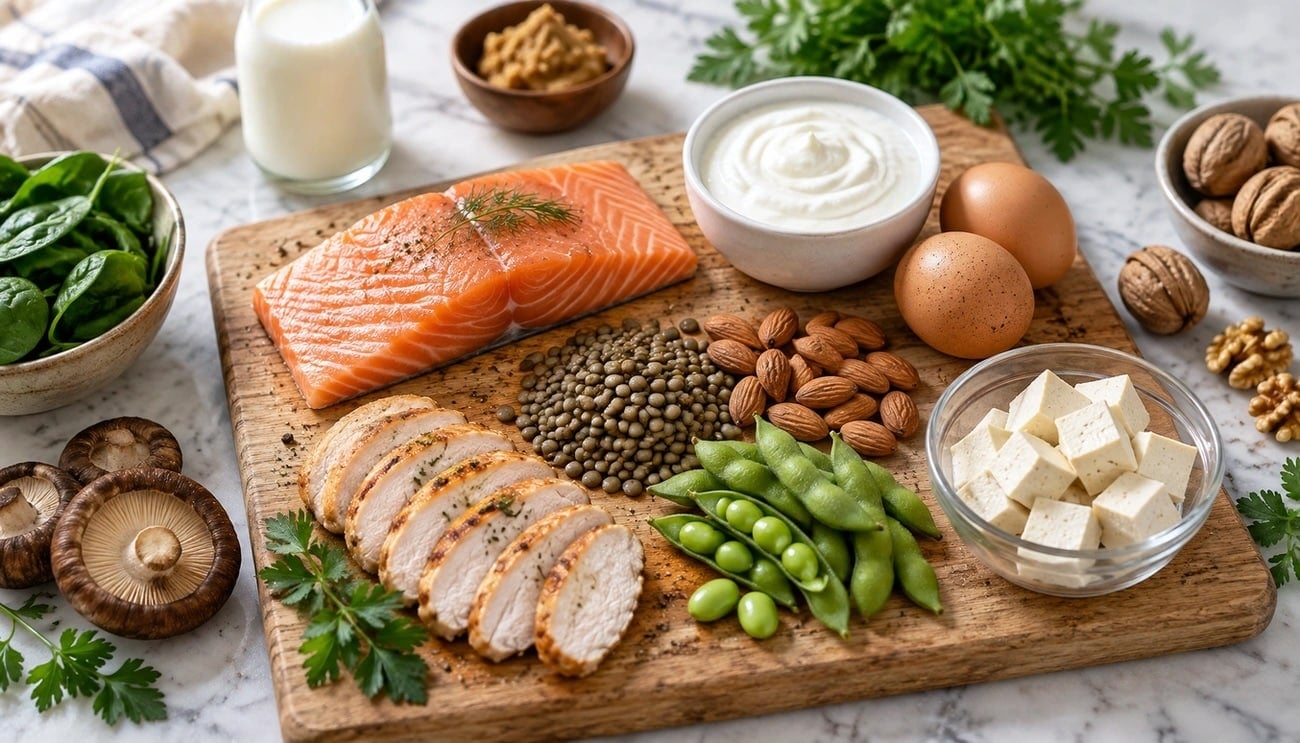
The new food pyramid represents the biggest change in federal nutrition guidance we’ve seen in decades. This isn’t just another diet update—it’s a complete rethinking of how we approach daily nutrition.
• Protein takes the spotlight: The guidelines now recommend 1.2-1.6 grams of protein per kilogram of body weight daily. That’s nearly double what we used to suggest, with protein emphasized at every single meal.
• Full-fat dairy is back: After years of promoting low-fat options, we now see recommendations for three daily servings of full-fat dairy products—but only those with no added sugars.
• Added sugars get eliminated: The position is crystal clear: “no amount of added sugars is recommended” for a healthy diet. Children under 10? No added sugars at all.
• Ultra-processed foods face serious scrutiny: These foods now link to over 30 health conditions, yet they still make up 60% of what Americans eat daily.
• Mixed messages create confusion: The pyramid visually promotes high-saturated fat foods while keeping the 10% daily calorie limit. Following both recommendations? Nearly impossible.
The real question is simple: Can Americans make these changes work within the realities of cost, convenience, and accessibility?
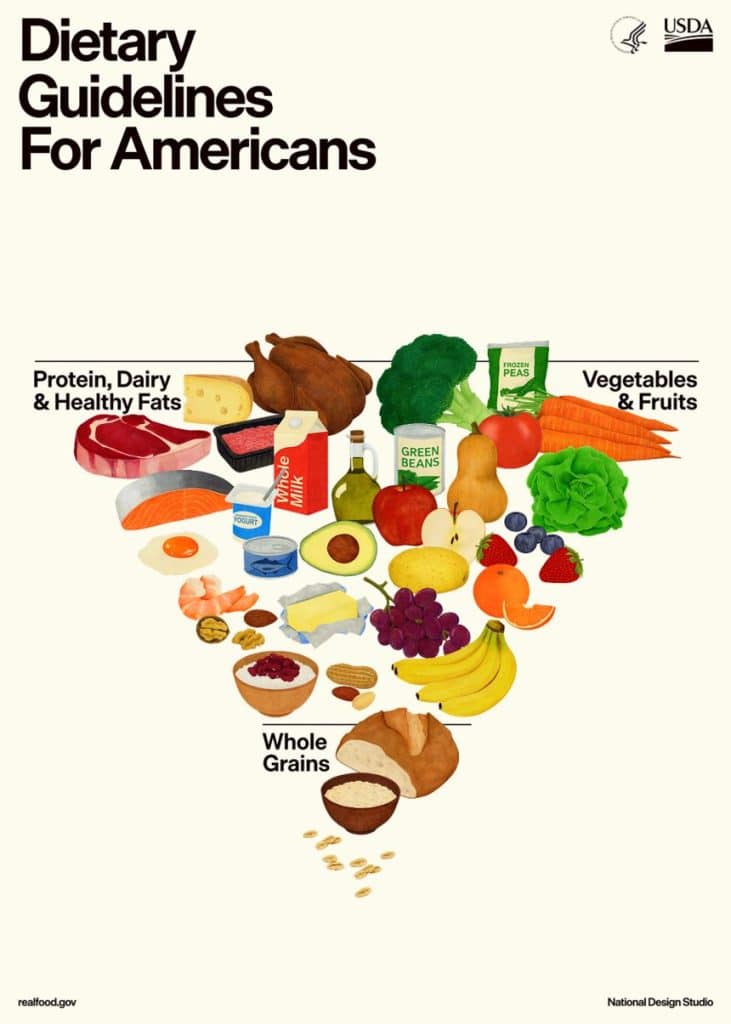
This updated food pyramid marks one of the most dramatic shifts in federal nutrition messaging we’ve experienced in decades [8]. What was once a triangle dominated by grains at the base has been completely restructured, potentially changing how we think about our daily meals.
The new food pyramid flips traditional nutrition advice completely by emphasizing protein consumption at every meal [10]. Food groups that once seemed familiar have been restructured entirely, with recommendations now calling for 1.2 to 1.6 grams of protein per kilogram of body weight per day—nearly doubling previous guidance [11] [10]. The food pyramid today looks vastly different from earlier versions, elevating animal-based proteins and full-fat dairy products while still advising people to limit saturated fat to less than 10 percent of daily calories [8].
The guidance takes an unusually strict position on sweets and processed foods, stating that “no amount of added sugars or non-nutritive sweeteners is recommended or considered part of a healthy or nutritious diet” [10]. The focus has shifted toward naturally nutrient-dense foods instead of ultra-processed options [10], a goal many experts support [8].
How This New Food Pyramid Changes Everything We Know About Nutrition
The government just made a major decision. For the first time since 2011, they abandoned the MyPlate model and returned to a pyramid design—but this one is completely inverted from the original [1]. This isn’t just a new graphic. It’s a complete shift in how we think about healthy eating.
From MyPlate Back to the Pyramid
Remember MyPlate? It replaced decades of pyramids in 2011 with that simple circle divided into food groups [8]. The plate showed fruits, vegetables, grains, and proteins with a glass of dairy on the side.
But here’s what many experts noticed—MyPlate still pushed grains as a major part of every meal. It gave only weak warnings about processed foods [10]. We needed something better.
What Makes This Pyramid So Different
Look at this new pyramid and you’ll see something shocking—it’s literally upside down [1].
Gone are the five or six food groups we used to see. This version has just three sections [1]. Protein, dairy, and healthy fats now sit at the wide top, showing their importance in every meal [1].
Whole grains? They’re squeezed into the narrow bottom [4]. The visual message is clear—eat way less grains than before. Yet the written guidelines still say 2-4 servings daily [10]. Confusing? Absolutely.
A Quick Look Back at Food Pyramids
Food pyramids have guided American eating habits for decades. The original 1992 version put grains at the bottom—recommending 6-11 servings daily—and fats at the tiny top [6]. This pushed Americans toward low-fat diets that often made blood cholesterol worse [6].
Other countries tried different approaches. Japan created a spinning top design in 2005 [7]. The USDA gave us MyPyramid with colored stripes and a person climbing stairs [7]. Then came MyPlate.
Now we’re back to a pyramid. But this upside-down version signals something important—the government wants to completely reset how Americans eat after decades of carb-heavy advice [15].
What does this mean for your healthy diet? We’re about to find out.
What’s Changed? Food Groups Get a Major Makeover
The updated food pyramid flips everything we thought we knew about nutrition. How we approach our daily meals just got a complete overhaul.
Protein Takes the Lead
Officials are “ending the war on protein” [8]. The message is clear: protein at every meal [9].
The new guidelines suggest 1.2 to 1.6 grams per kilogram of body weight daily—nearly double the previous recommendation of 0.8 grams [8] [10]. For a 150-pound person, that’s approximately 81.6 to 109 grams daily [11]. Surprisingly, the average adult man already consumes about 100 grams of protein daily [8].
What counts as protein? Both animal sources (eggs, poultry, seafood, red meat) and plant proteins (beans, peas, lentils, nuts, seeds) [12]. Your body needs this fuel to function optimally.
Full-Fat Dairy Returns
After decades of low-fat promotion, full-fat dairy products are back [9]. The recommendation? Three servings daily [13] [11].
We’re talking whole milk, yogurt, cheese, and other dairy products—with no added sugars [13]. Research shows both low-fat and whole-fat dairy versions have been linked to lower cardiovascular risk [14]. Your body knows what to do with real, unprocessed foods.
Whole Grains Take a Backseat
Whole grains now sit at the narrow bottom of the pyramid [14]. Still important? Yes. The guidelines recommend two to four servings of whole grains daily [1] [14].
The focus shifts to “prioritize fiber-rich whole grains” while “significantly reducing highly processed, refined carbohydrates” [12][132]. Think less white bread, fewer packaged breakfast options, and fewer crackers. The distinction between whole and refined grains represents a major shift [14].
Fruits and Vegetables Stay Strong
Some things don’t change. The guidelines maintain strong support for fruits and vegetables—three servings of vegetables and two servings of fruits daily for a typical 2,000-calorie diet [11].
Eat them throughout the day, focusing on whole forms [9]. “Frozen, dried, or canned vegetables or fruits with no or very limited added sugars can also be good options” [11]. Your body thrives on these nutrient-dense foods.
Sugar and Ultra-Processed Foods: The Strictest Guidelines Yet
The new guidance takes the strongest position on sugar and processed foods we have ever seen from federal nutrition policy.
Added sugars get a complete ban
The updated food pyramid explicitly states that “no amount of added sugars or non-nutritive sweeteners is recommended or considered part of a healthy or nutritious diet” [10]. Children face even stricter rules – no added sugars until age 10 [15]. This jumps significantly from previous advice that limited sugar only for children under 2 [3].
The numbers tell the story. Guidelines recommend keeping added sugars to less than 10% of daily calories [16]. Yet the average American consumes approximately 17 teaspoons daily [17] – far beyond what experts consider healthy.
Ultra-processed foods face serious scrutiny
Ultra-processed foods now carry serious health warnings due to their connection to over 30 health conditions [18]. We are talking about obesity, type 2 diabetes, and cardiovascular disease [17]. Research published in the BMJ confirms these links, with evidence graded as “convincing” or “highly suggestive” for many conditions [19].
Here is what makes this concerning: ultra-processed foods make up approximately 60% of Americans’ calorie intake [15].
Real-world challenges remain
Following these recommendations is not always simple. Consumers face barriers of accessibility, affordability, and convenience [5]. Many shoppers struggle to identify added sugars and ultra-processed items with confusing food labels and marketing tactics [17].
Real change requires both individual choices and broader policy shifts [20]. We need solutions that work for families managing cost, time, and access to healthy options.
Questions About the New Guidelines
The updated food pyramid raises some important questions that nutrition experts are discussing.
Saturated Fat Limits vs. Visual Recommendations
The guidelines still recommend limiting saturated fat to 10% of daily calories. Yet the pyramid prominently displays foods high in saturated fat [21]. Following both recommendations creates a mathematical challenge [22].
What About Red Meat and Full-Fat Dairy?
The pyramid shows steak, cheese, whole milk, and butter as recommended foods [10]. Three servings of full-fat dairy plus cooking with butter equals 17 grams of saturated fat—close to the 22-gram daily limit for a 2,000-calorie diet [10]. Add red meat? You exceed the limit entirely [22].
Healthy Fats: Which Ones Count?
The guidelines group saturated-fat-rich meats with plant-based foods under “healthy fats” [10]. Olive oil appears as a source of “essential fatty acids,” yet contains fewer of these compared to other plant oils [10].
Expert Concerns
Nutrition scientists question these inconsistencies [2]. Seven of nine experts who wrote the scientific foundation reviews have ties to meat, dairy, and food industries [22]. This creates confusion about what “moderation” actually means [2].
What does this mean for your daily food choices? The conflicting messages make it challenging to know which guidance to follow.
Conclusion
The updated food pyramid represents a fundamental shift in nutritional thinking. Therefore, we must reconsider how we approach our daily meals and overall eating habits. This inverted triangle essentially flips decades of conventional wisdom upside down, placing protein at the forefront while significantly downplaying grains.
Additionally, this new guidance makes several bold statements about what constitutes healthy eating. Full-fat dairy products have made a surprising comeback after years of low-fat recommendations. Meanwhile, the strictest position ever taken against added sugars declares them entirely unnecessary for a nutritious diet.
Nevertheless, several contradictions within these guidelines raise important questions. The prominent display of high-saturated fat foods seemingly conflicts with the 10% daily calorie limit still recommended for saturated fats. Similarly, the mathematical reality makes following both the visual guidance and written recommendations nearly impossible.
What remains clear, however, is that ultra-processed foods face unprecedented scrutiny due to their connections to numerous health conditions. This aspect of the guidance aligns with growing scientific consensus about the dangers of highly processed items in our diets.
Above all, these changes reflect a dramatic pendulum swing in nutritional thinking. Whether this new pyramid will truly change American eating habits forever depends on both individual choices and broader policy shifts. The real challenge lies not just in understanding these recommendations but implementing them within the constraints of accessibility, affordability, and our modern food environment.
FAQs
Q1. How does the new food pyramid differ from previous versions? The updated food pyramid is inverted, with protein and healthy fats at the top and grains at the bottom. It emphasizes protein consumption at every meal, promotes full-fat dairy, and takes a strict stance against added sugars and ultra-processed foods.
Q2. What are the main recommendations for protein intake in the new guidelines? The new guidelines recommend consuming 1.2 to 1.6 grams of protein per kilogram of body weight daily, which is nearly double the previous recommendation. This includes both animal and plant-based protein sources.
Q3. How does the updated pyramid address sugar consumption? The new guidance states that no amount of added sugars or non-nutritive sweeteners is recommended or considered part of a healthy diet. For children, it recommends no added sugars until age 10.
Q4. What is the stance on dairy products in the new food pyramid? The updated pyramid recommends full-fat dairy products with no added sugars, suggesting three servings daily. This marks a shift from previous guidelines that promoted low-fat dairy options.
Q5. Are there any controversies surrounding the new food pyramid? Yes, there are some contradictions, such as promoting foods high in saturated fat while still recommending a limit on saturated fat intake. Some nutrition experts have raised concerns about potential industry influence on the guidelines.
References
[1] – https://bwhi.org/2026/01/16/the-new-food-pyramid-and-what-it-means-for-our-plates/
[2] – https://www.aarp.org/health/healthy-living/how-new-dietary-guidelines-affect-older-adults/
[3] – https://www.cnn.com/2026/02/09/health/new-food-pyramid-comparison-wellness
[4] – https://nutritionsource.hsph.harvard.edu/2026/01/09/dietary-guidelines-for-americans-2025-2030/
[5] – https://www.eatingwell.com/new-food-pyramid-11882035
[6] – https://hsph.harvard.edu/news/centennial-food-guides-history/
[7] – https://paragoninstitute.org/paragon-prognosis/the-food-pyramid-gets-flipped-a-new-rebase-in-nutrition-policy/
[8] – https://theconversation.com/americas-new-food-pyramid-whats-changed-and-why-273315
[9] – https://nutritionsource.hsph.harvard.edu/healthy-eating-pyramid/
[10] – https://www.britannica.com/science/food-pyramid
[11] – https://www.pbs.org/newshour/health/why-nutrition-experts-are-wary-of-new-federal-dietary-guidelines-that-advise-doubling-protein
[12] – https://www.usda.gov/about-usda/news/press-releases/2026/01/07/kennedy-rollins-unveil-historic-reset-us-nutrition-policy-put-real-food-back-center-health
[13] – https://www.cnn.com/2026/01/07/health/dietary-guidelines-rfk-maha
[14] – https://www.usda.gov/sites/default/files/documents/dga-fact-sheet.pdf
[15] – https://www.idfa.org/news/new-dietary-guidelines-affirm-dairys-central-role-in-a-healthy-diet-and-recommend-dairy-products-at-all-healthy-fat-levels
[16] – https://www.npr.org/2026/01/07/nx-s1-5667021/dietary-guidelines-rfk-jr-nutrition
[17] – https://sncs-prod-external.mayo.edu/hometown-health/speaking-of-health/processed-foods-what-you-should-know
[18] – https://www.fda.gov/food/nutrition-facts-label/added-sugars-nutrition-facts-label
[19] – https://www.psychologytoday.com/us/blog/food-junkie/202602/the-new-us-dietary-guidelines-stand-on-added-sugar
[20] – https://www.today.com/health/diet-fitness/5-tips-eat-less-ultraprocessed-food-dietitians-rcna252803
[21] – https://www.bmj.com/content/384/bmj-2023-077310
[22] – https://news.fiu.edu/2026/how-the-new-food-pyramid-could-disrupt-food-markets
[23] – https://chlpi.org/news-and-events/news-and-commentary/food-law-and-policy/how-to-reduce-the-consumption-of-sugar-with-good-policy/
[24] – https://www.theeducatedpatient.com/view/special-report-saturated-fat-guidance-sparks-confusion-in-new-dietary-guidelines
[25] – https://www.theguardian.com/environment/2026/feb/03/us-dietary-guidelines
[26] – https://www.statnews.com/2026/01/13/new-food-pyramid-saturated-fats-dietitian/